
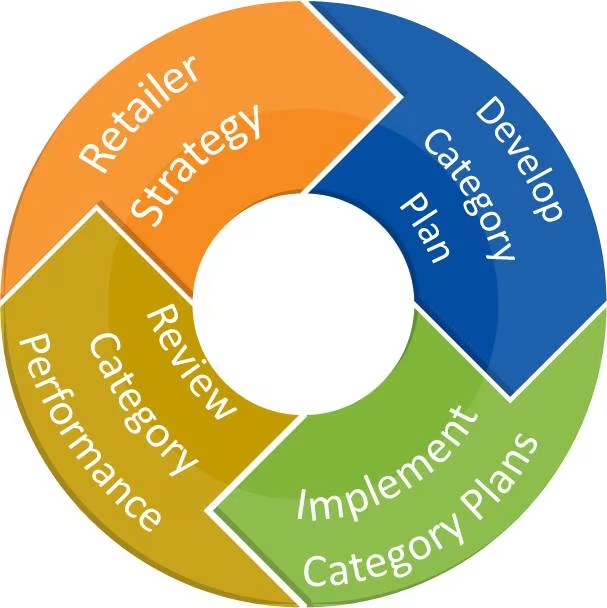
Category management is a structured approach to managing groups of related products as strategic business units. It helps retailers and suppliers make better decisions about assortment, pricing, promotions, placement, inventory, and customer needs.
What Is Category Management?
Category management organizes related products according to how customers shop for them and manages each category based on its role in the business. Rather than treating every product separately, retailers evaluate the category as a complete customer and business unit.
Start With the Customer
Understanding customers is the foundation of category management. Retailers need to know what shoppers need, how they make purchasing decisions, which products they compare, and what influences their choices.
Define the Category
A category should have clear boundaries based on customer needs and shopping behavior. A well-defined category makes it easier to analyze performance, establish objectives, and develop an effective strategy.
Understand the Category Role
Different categories serve different purposes. Some attract customers, some generate transactions, while others support profitability or strengthen the retailer’s overall market position. Identifying the category role helps determine where resources should be invested.
Use Reliable Data
Sales, margin, inventory, pricing, promotion, and customer data provide the foundation for informed category decisions. Reliable data can reveal product trends, purchasing patterns, performance gaps, and opportunities for growth.
Build the Right Assortment
Assortment planning determines which products should be available to customers. Retailers need to balance customer choice with profitability, inventory efficiency, available space, and local demand.
Manage Pricing and Promotions
Pricing and promotions should support the objectives of each category. Retailers need to consider customer price sensitivity, competitor activity, margins, promotional effectiveness, and the long-term impact of discounts.
Optimize Product Placement
Product placement affects how easily customers can discover and compare products. Physical retailers use shelf position, store layout, signage, and space allocation, while online retailers use navigation, search, recommendations, and digital merchandising.
Collaborate With Suppliers
Retailers and suppliers can work together to improve category performance by sharing relevant insights, understanding customer demand, developing promotions, and identifying assortment opportunities.
Measure Category Performance
Category strategies should have measurable objectives. Sales, profit, inventory turnover, market share, conversion, and promotional performance can help retailers evaluate results and adjust their strategies.
Why the Foundations Matter
Artificial intelligence, advanced analytics, and retail technology can strengthen category management, but they do not replace its basic principles. Customer understanding, accurate data, effective assortment, strategic pricing, strong execution, and continuous measurement remain essential.
Latest Status
Category management continues to evolve as retailers adopt digital commerce, automation, advanced analytics, and AI. Despite these changes, its core purpose remains the same: understand customer needs and use that knowledge to make better decisions about products, pricing, promotions, placement, and profitability.