
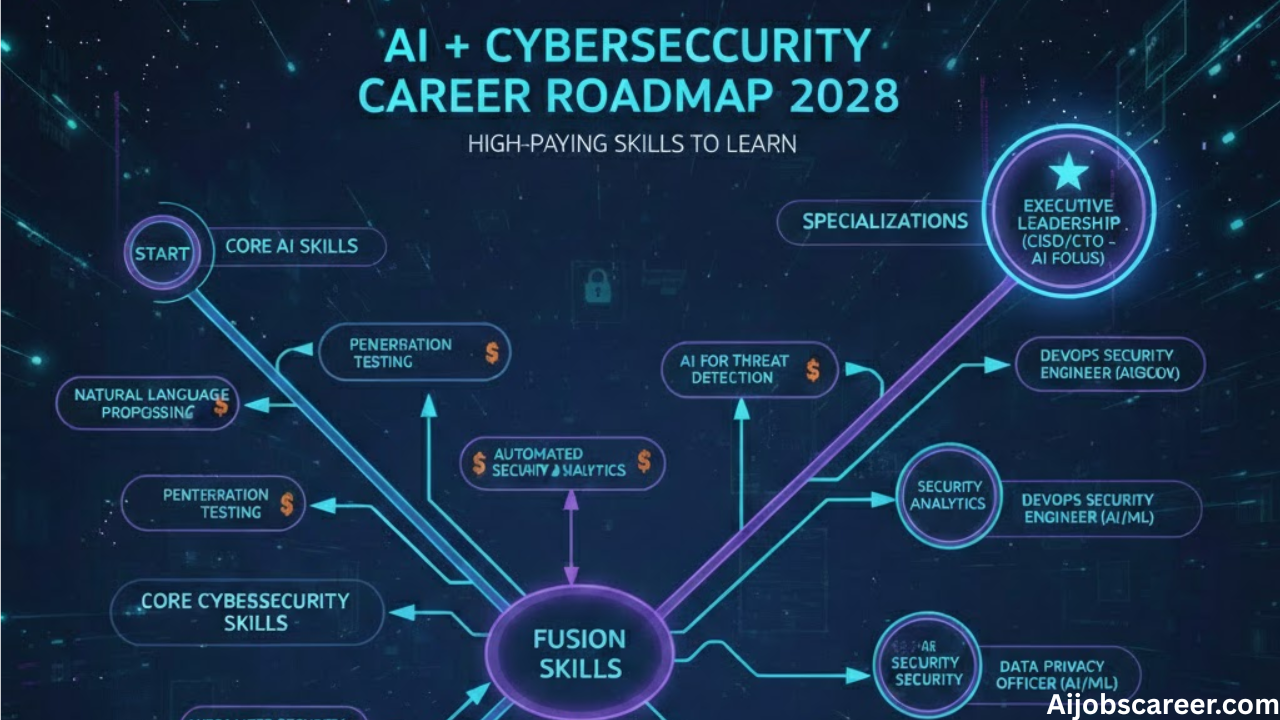
Introduction
The cybersecurity environment is changing more rapidly than it has ever been due to Artificial Intelligence. With the use of AI-driven systems, cloud-based infrastructure, and automated tools in business, there is also a risk of advanced cyberattacks. This change has placed a titanic need of AI Cybersecurity Specialists professionals who have the ability to combine both cybersecurity knowledge and skills in artificial intelligence to identify, prevent and react to contemporary dangers.
In case you have decided to join a high-salary technology sector in 2026, such asan AI Cybersecurity Specialist, this roadmap will help you to get there step-by-step.
What is an AI Cybersecurity Specialist?
An AI Cybersecurity Specialist is a specialist with sufficient knowledge of Artificial Intelligence and Machine Learning to enhance the security systems. Contrary to the old-fashioned cybersecurity analysts who operate based on preset rules, AI cybersecurity specialists develop smart systems that identify abnormal behavior, anticipate security threats, and can automatically respond to them.
They handle threat detection models, fraud prevention systems, malware analysis, anomaly detection, and automated incident response solutions. These experts are also sought after in the fintech, healthcare, SaaS, defense, and enterprise IT industries.
The Reason why AI Cybersecurity is a well-paid job in 2026
Cybercrime is evolving on a high level, as AI-driven attacks, ransomware automation, and deepfake-based fraud are growing at a high pace. Companies are spending a lot of money on AI-powered security solutions in order to keep up with attackers.
The field of AI cybersecurity is expected to be a well-paid position in 2026 due to a scarcity of skilled professionals: AI-based cybersecurity skills, knowledge of machine learning technologies, data processing, and knowledge of programming languages. Such a combination of abilities renders professionals very useful.
The entry-level AI cybersecurity professionals in India can get incomes between 8-15 LPA, and the experienced specialists can receive incomes of 25-45 LPA or more. Salaries across the world may vary between 110,000 and 180,000 per annum according to experience and location.
Step 1: Establishing Good Cybersecurity Foundations
You need to become familiar with basic cybersecurity principles before going into AI. Start with:
- Principles of networking (TCP/IP, DNS, Firewalls, VPN)
- Operating systems (Linux, Windows).
- Cryptography basics
- Concepts of web security (OWASP Top 10).
- Threat management and incident response.
Acquire such tools as Wireshark, Metasploit, Burp Suite, and simple SIEM systems. To generate credibility, certifications such as CompTIA Security+, CEH, or Google Cybersecurity Certificate can be used.
AI security capabilities will not work without well-developed fundamentals
Step 2: Learn Programming and Scripting
The AI cybersecurity jobs require programming. You should focus on:
- Python (most important)
- SQL for database handling
- Basic Bash scripting
- Understanding APIs
Python has found application in machine learning, automation or security scripting. It will be used to develop anomaly detection, vulnerability scanning automation, and log analysis.
Begin with the data structures, algorithms, and small automation security scripts.
Step 3: Learn about the concepts of machine learning and AI
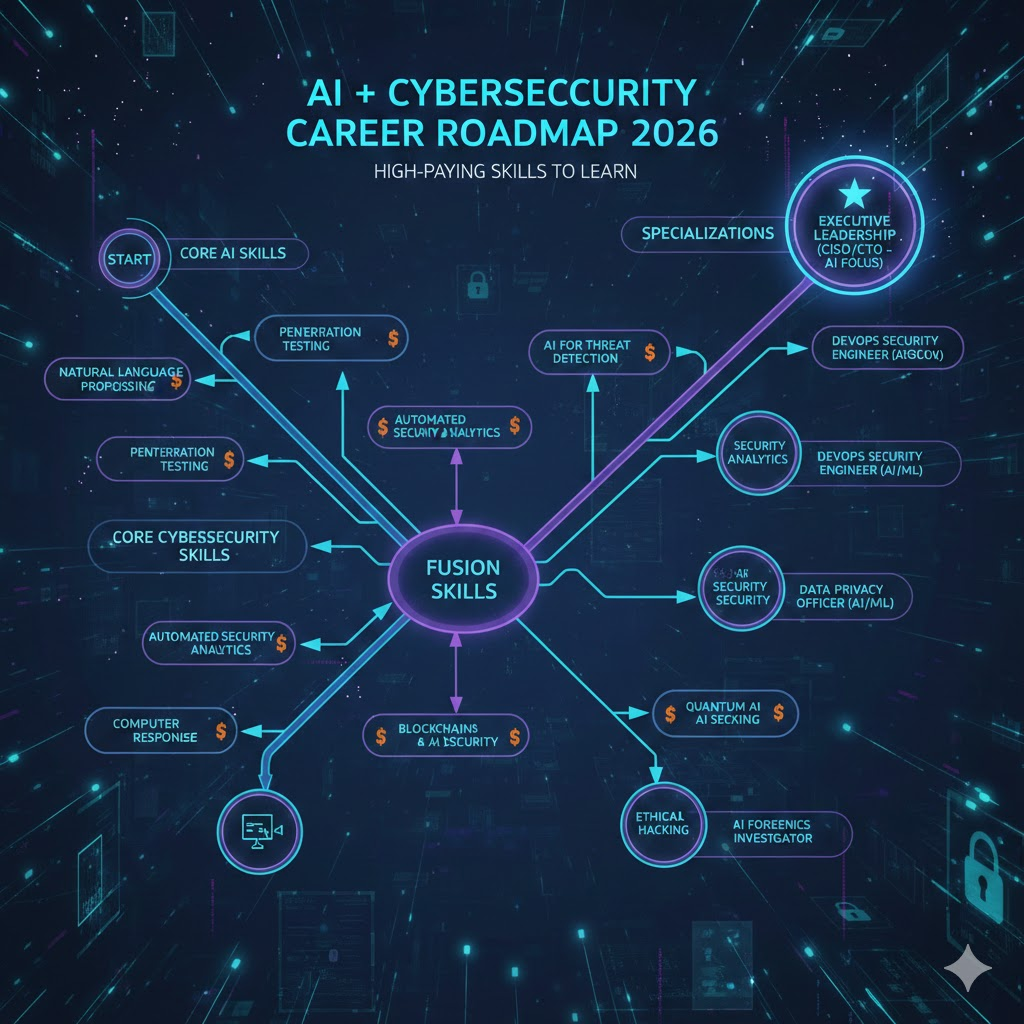
After building your foundations in cybersecurity and programming, you can graduate into AI and Machine Learning. Focus on:
- Monitored and unmonitored learning.
- Categorization and regression.
- Clustering techniques
- Neural networks
- Threat intelligence Natural Language Processing.
Know famous libraries such as TensorFlow, PyTorch, Scikit-learn, and Pandas. Develop models used to identify spam, phishing, fraudulent transactions or suspicious network traffic.
Knowledge of how attackers abuse AI will also aid in you in creating better defensive models.
Step 4: Educate yourself in AI-Powered Security Tools
The AI-based tools in modern businesses are used to carry out cybersecurity. Familiarize yourself with:
- AI-driven SIEM platforms
- Endpoint Detection and Response (EDR)
- SOAR tools
- Security monitoring systems in the cloud.
Hands-on practice is crucial. The project will involve building a home lab to simulate attacks using virtual machines to test AI-based defense systems.
You may utilize websites such as TryHackMe, Hack The Box, and Kaggle to do the practice on real-world scenarios and machine learning data sets.
Step 5: Be familiar with Cloud and DevSecOps
By the year 2026, a majority of organizations will run on cloud platforms. AI cybersecurity experts should be knowledgeable of:
- AWS, Azure, or Google Cloud security.
- Cloud threat detection
- Security of containers (Docker, Kubernetes)
- DevSecOps integration
The aspect of security has been incorporated in the development pipelines. Information on how AI can be used to automate vulnerability scanning and real-time monitoring in CI/CD pipes will provide you with a significant edge.
Step 6: Work on Real Projects
To be a leader in this well-paid profession, construct practical projects that include:
- Phishing detector system based on AI.
- The model of malware classification.
- Machine learning intrusion detection system.
- Banking transaction fraud detector model.
Place your projects on GitHub and write in-depth case studies on LinkedIn. Recruiters do not like applicants who have merely certifications without proven skills.
Any cybersecurity company, SOC team, or artificial intelligence start-up offerings can raise your profile considerably.
Step 7: Obtain Higher Certifications (Not Prerequisite but worthwhile)
Skills are considered to be the most important; however, certifications may enhance credibility. Consider:
- Certified Information Systems Security Professional (CISSP).
- Certified Ethical Hacker (CEH)
- AWS Security Specialty
- Machine Learning or AI certifications on popular websites.
Select certifications that match your career direction – do you want to be a cloud security specialist, a threat intelligence specialist, or an AI model development specialist?
AI Cybersecurity Specialist in 2026
To be successful in this field, you require:
- Analytical thinking.
- High problem-solving capabilities.
- Understanding of cyber threats and patterns of attack.
- Machine learning expertise.
- Programming proficiency.
- Reporting incident communication skills.
Soft skills are also significant since AI cybersecurity experts tend to collaborate with cross-functional teams, such as developers, security analysts, and management.
Career Roles You Can Target
By using this roadmap, you will be eligible to work in positions such as:
- AI Security Analyst.
- Machine Learning Security Engineer.
- Intelligence Cyber Threat Engineer.
- Cybersecurity Data Scientist/Cybersecurity Analyst.
- Security Automation Engineer.
Having 3-5 years of experience, you can switch to senior positions like AI Security Architect or Head of Cyber Defense.
Conclusion: Is AI Cybersecurity Worth It in 2026?
Absolutely. One of the future-proof and highest-paying technological jobs in 2026 is an AI Cybersecurity Specialist. With the current development of cyber threats on the basis of artificial intelligence, organizations require professionals possessing knowledge of both artificial intelligence systems and cybersecurity models.
Provided that you begin today and develop solid foundations, learn how to program, master machine learning, and apply it to practical projects, you can be well-placed to have a very fulfilling career.
The key is consistency. This is a competitive field, yet it is highly profitable to individuals who have technical skills coupled with experience. This roadmap is a step-by-step guide that will help you make an entry into one of the most sought-after technology professions of the decade.