
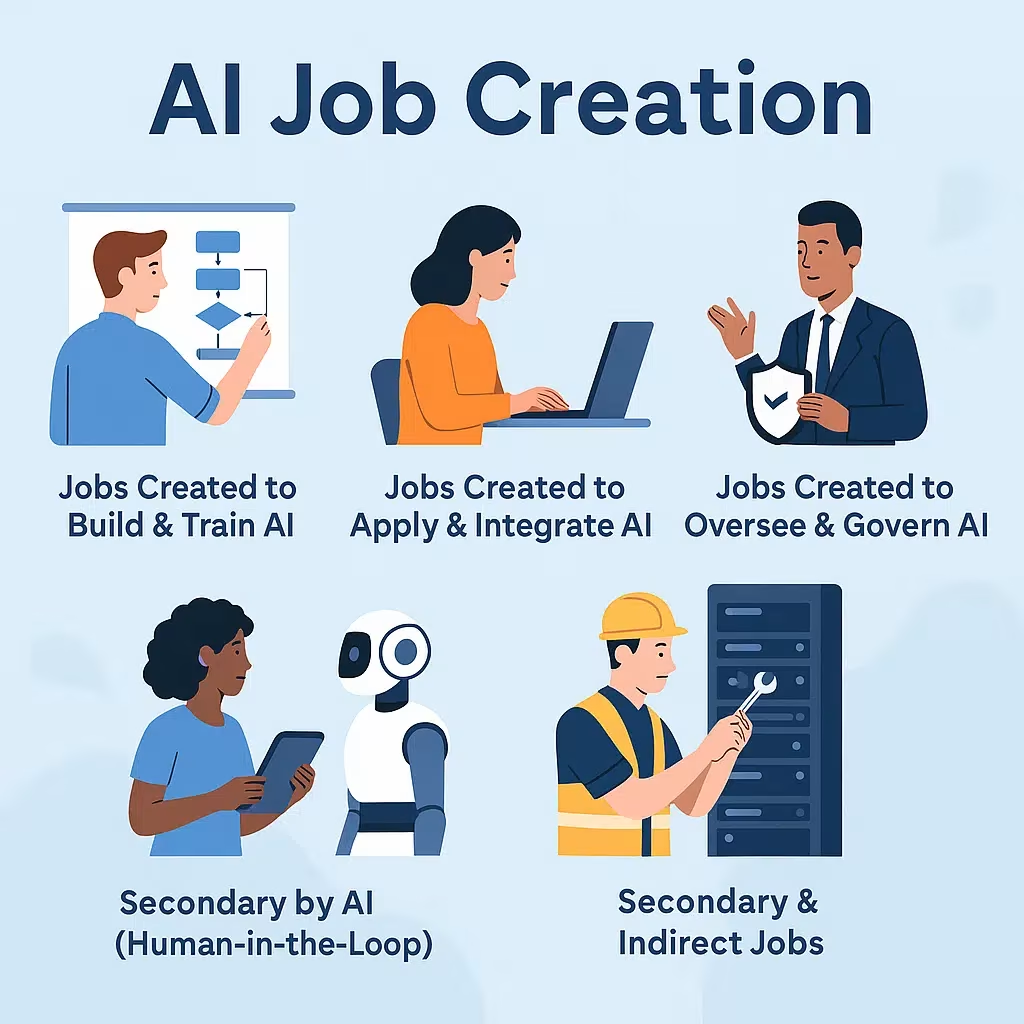
Artificial intelligence is changing the way people work across software development, marketing, research, customer service, finance, education, design, and many other industries. The bigger workplace shift may not be AI replacing every worker, but workers who use AI becoming more productive than those who do not.
AI Is Changing Work, Not Just Jobs
Most jobs consist of many different tasks. AI can automate some repetitive activities while leaving other responsibilities that require judgment, communication, creativity, physical work, accountability, or specialized knowledge to people.
This means AI can transform a job without necessarily eliminating the entire occupation. Employees may spend less time on routine tasks and more time on activities that require human decision-making and oversight.
Why AI Skills Matter
People who know how to use AI effectively can automate repetitive workflows, summarize information, generate drafts, analyze data, support research, and accelerate certain technical tasks. These capabilities can increase productivity when the results are properly reviewed.
Simply having access to an AI tool is not enough. Users need to understand how to define a problem, provide appropriate context, evaluate outputs, identify errors, and integrate AI into an existing workflow.
Human Expertise Remains Important
AI systems can produce incorrect or incomplete information. Human review remains important when work involves accuracy, privacy, security, ethical considerations, financial decisions, or other significant consequences.
Critical thinking, communication, creativity, leadership, domain expertise, relationship building, and accountability continue to provide value. AI can support these capabilities, but it does not remove the need for human responsibility.
The Rise of AI-Enabled Workers
An AI-enabled worker understands both the capabilities and limitations of AI. A marketer, for example, might use AI to generate campaign ideas or analyze information while keeping responsibility for strategy, brand decisions, and final approval.
A developer can use AI to assist with coding, debugging, and documentation while reviewing the generated code for correctness, security, and maintainability. Similarly, a researcher can use AI to organize information while verifying important claims through reliable sources.
AI Literacy Is Becoming Important
AI literacy can benefit both technical and non-technical professionals. Workers do not necessarily need to become machine learning engineers, but understanding basic AI concepts can help them identify useful applications and recognize potential limitations.
Learning can begin with basic AI concepts and practical experience with relevant tools. More advanced skills can include workflow automation, data analysis, AI-assisted programming, prompt design, model evaluation, and responsible AI practices.
Organizations Must Adapt Too
The transition to AI-enabled work is not only an individual responsibility. Organizations can provide training, establish AI-use policies, protect sensitive information, and create review processes for AI-generated outputs.
Companies also need to identify genuine business problems that AI can address instead of adopting technology without a clear purpose. Effective implementation depends on matching AI capabilities with specific tasks and measurable goals.
How Workers Can Prepare
Workers can begin by identifying repetitive tasks in their current roles and testing whether approved AI tools can assist with them. They can measure whether AI saves time, improves quality, or creates new problems that require additional review.
Combining AI knowledge with existing professional expertise can also create a valuable skill combination. The strongest advantage may come from knowing how to apply AI to a specific industry, technical discipline, or business problem.
Conclusion
AI is unlikely to affect every job in the same way, but it is already changing how many tasks are performed. Developing practical AI skills alongside human expertise can help workers adapt to workplaces where artificial intelligence increasingly supports everyday work.