
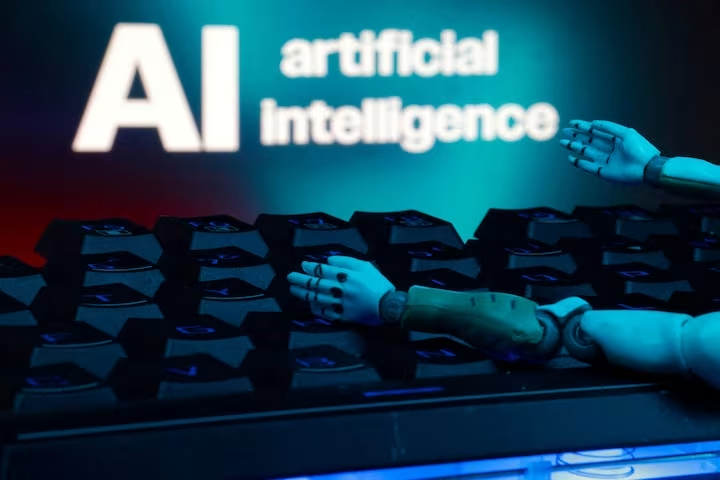
Companies are cutting or restructuring jobs as more investment moves toward artificial intelligence, automation and digital infrastructure. The shift is changing workforce requirements across industries, with some traditional roles declining while demand grows for employees with AI-related skills.
AI Investment Is Reshaping Workforce Plans
Businesses are increasing spending on AI systems, computing infrastructure, software and automation. As companies decide where to allocate capital, some are reducing spending on roles that can be partly automated or reorganized with new technology.
Job Cuts Are Happening Alongside AI Hiring
The workforce impact is not simply a move from human employees to machines. Companies can reduce positions in some departments while hiring workers with expertise in artificial intelligence, machine learning, data, software engineering and automation.
AI Is Changing Tasks Within Jobs
Many occupations are being affected at the task level rather than disappearing entirely. AI can handle repetitive activities such as drafting, summarizing, data processing, customer support and routine analysis, allowing employees to focus on responsibilities that require judgment and specialized knowledge.
Technology Skills Are Becoming More Valuable
As businesses adopt AI, employees who can use, evaluate and implement these systems can become increasingly valuable. Generative AI, machine learning, data analysis, automation, AI security and model evaluation are among the areas attracting greater attention from employers.
Productivity Is Driving Adoption
Companies are investing in AI partly because the technology can help employees complete certain tasks faster. Businesses are testing AI for software development, marketing, customer service, research, content production, data analysis and other operational activities.
Workers Need to Adapt
The changing labor market is increasing the importance of continuous skills development. Workers can strengthen their position by learning how AI affects their profession and developing practical skills that complement rather than duplicate automated tasks.
Human Skills Still Matter
Critical thinking, communication, creativity, problem-solving and professional judgment remain important as companies integrate AI into daily operations. Employees also need to verify AI-generated information and understand the limitations of automated systems.
The Workforce Transition Is Uneven
The effect of AI varies by industry, company and occupation. Some businesses may use AI mainly to increase productivity, while others may restructure teams or reduce headcount as part of broader cost-cutting strategies.
Latest Status
Companies are continuing to invest heavily in artificial intelligence while reassessing workforce needs. The result is a changing employment market in which some jobs are being reduced or redesigned, while new opportunities are emerging for workers who can develop and apply AI effectively.