
Artificial intelligence is becoming a major workplace skill in 2026, creating opportunities across technical and non-technical careers. Beginners can enter the field by combining AI fundamentals with practical experience, industry knowledge and skills that employers continue to value.
The World Economic Forum’s Future of Jobs Report 2025 identifies AI and big data as the fastest-growing skill area through 2030. Analytical thinking, creative thinking, resilience, flexibility and lifelong learning are also among the skills employers expect to remain important.
Start With AI Fundamentals
Beginners do not need to start by building advanced machine-learning systems. The first stage should cover artificial intelligence concepts, generative AI, large language models, machine-learning basics, data privacy, responsible AI and the limitations of AI-generated results.
Practical experience should accompany theory. Beginners can use AI tools for research, document analysis, writing assistance, coding support, data analysis and repetitive-task automation while learning how to check and improve AI-generated results.
Build Technical Skills
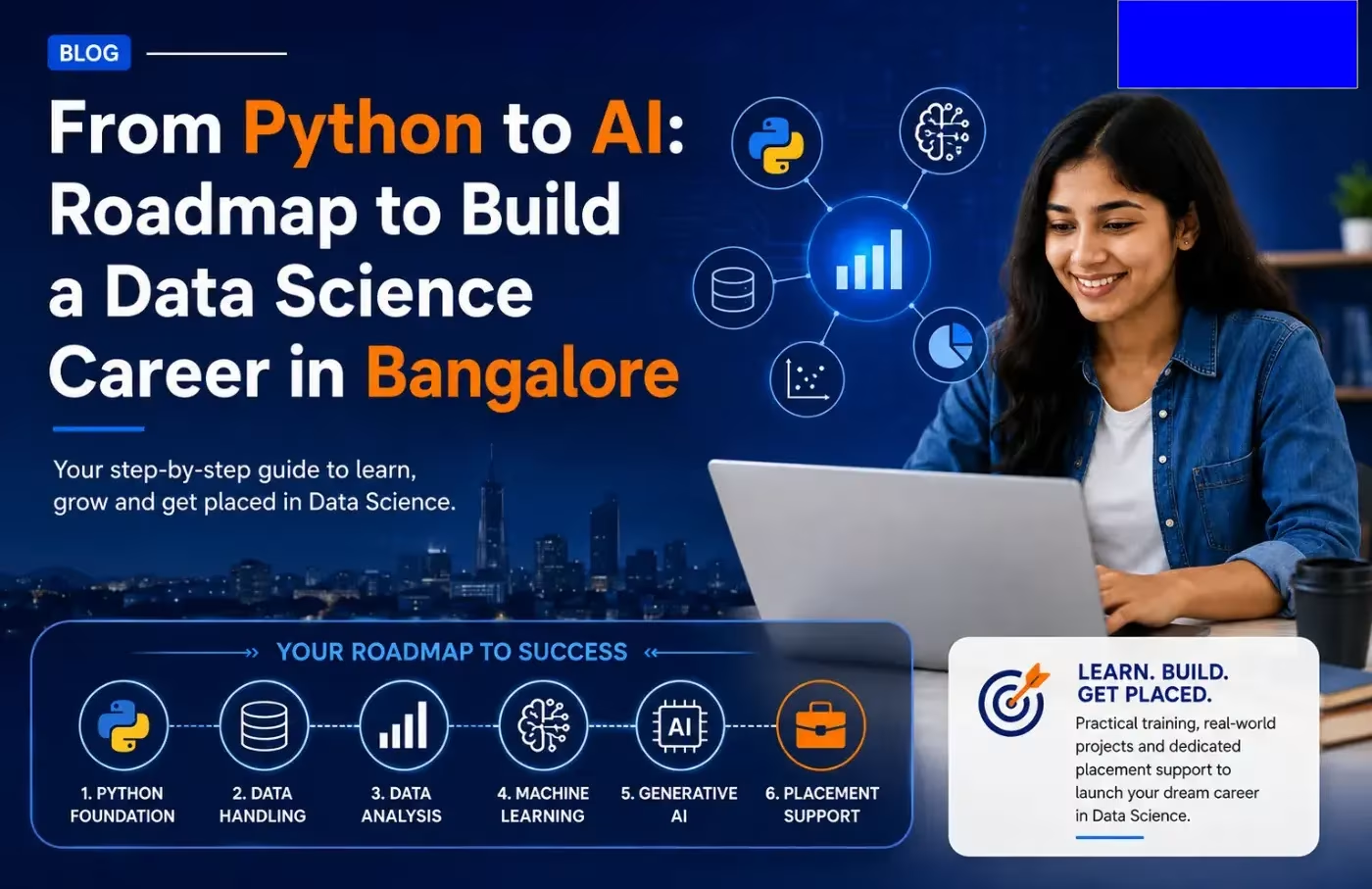
People targeting technical AI careers should develop skills in Python, statistics, databases, data structures and basic mathematics. They can then progress into machine learning, deep learning, natural-language processing, computer vision, model evaluation and AI application development.
Modern AI application roles may also require knowledge of APIs, vector databases, retrieval-augmented generation, model evaluation, cloud platforms, deployment and AI agents. These skills allow professionals to move beyond basic chatbot use and build practical AI systems.
Develop AI Skills for Non-Technical Careers
AI careers are not limited to software engineering. Marketing, sales, finance, operations, customer service, education, research and other fields are incorporating AI into everyday workflows.
AI literacy can therefore complement an existing professional background. A marketer can specialize in AI-assisted marketing, an analyst can use AI for research and reporting, and an operations professional can focus on workflow automation.
Choose a Career Track
Technical career options include AI engineer, machine-learning engineer, data scientist, AI application developer, machine-learning operations specialist and AI research roles.
Other paths include AI product management, AI business analysis, AI automation, AI-focused marketing, data storytelling, AI consulting and professional roles that combine existing industry expertise with AI skills.
Build a Practical Portfolio
A portfolio gives employers evidence of applied ability. Beginners can create projects such as an AI document assistant, customer-support workflow, research tool, content-analysis application, data dashboard or business-process automation system.
Each project should clearly explain the problem, technology used, development process, result and limitations. Technical candidates can also publish code and documentation so employers can review their work.
Use Certifications Strategically
Certifications can provide structured learning and demonstrate familiarity with particular technologies. Beginners can consider foundational AI and cloud certifications before moving toward specialized credentials in machine learning, cloud AI, data or AI engineering.
Certification is most useful when combined with practical work. Projects, internships, freelance assignments and documented workplace applications can demonstrate how the knowledge is being used.
Learn AI Agents and Automation
AI agents are becoming an important part of workplace automation. Microsoft’s 2026 Work Trend Index reported substantial growth in the use of agents across Microsoft 365 and highlighted the increasing role of employees who can work with AI systems.
Learning about agents involves more than writing prompts. Beginners should understand how to define tasks, provide reliable context, design multi-step workflows, evaluate outputs and maintain appropriate human oversight.
Keep Human Skills Strong
AI skills do not replace communication, judgment and critical thinking. The World Economic Forum identifies analytical thinking as a leading core skill for employers, alongside creative thinking, resilience, flexibility and lifelong learning.
These skills become especially important when AI produces incomplete or incorrect information. Professionals need to verify results, identify errors and make decisions based on reliable evidence.
A 12-Month Learning Plan
During the first three months, beginners can focus on AI fundamentals, prompting, productivity tools, basic data concepts and responsible AI. The goal should be to complete practical exercises rather than only watching courses.
Months four through six can focus on a selected career path. Technical learners can study Python, machine learning and AI application development, while non-technical learners can apply AI to a specific professional field.
Months seven through nine should focus on portfolio development. Completing two or three substantial projects can provide evidence of practical skills and give candidates material to discuss during interviews.
During months ten through twelve, candidates can refine their resumes and professional profiles, complete a relevant certification if appropriate, publish project documentation and apply for internships, entry-level jobs, freelance assignments or internal AI opportunities.
Keep Learning as AI Changes
AI tools and techniques are developing quickly, making continuous learning important. The World Economic Forum expects significant changes in workplace skills through 2030, while industry research continues to show growing demand for AI literacy.
For beginners entering the field in 2026, a practical strategy is to combine foundational knowledge, hands-on projects, relevant certifications, domain expertise and strong human skills. The latest workforce research points toward professionals who can use AI effectively while remaining responsible for the quality and outcomes of their work.