
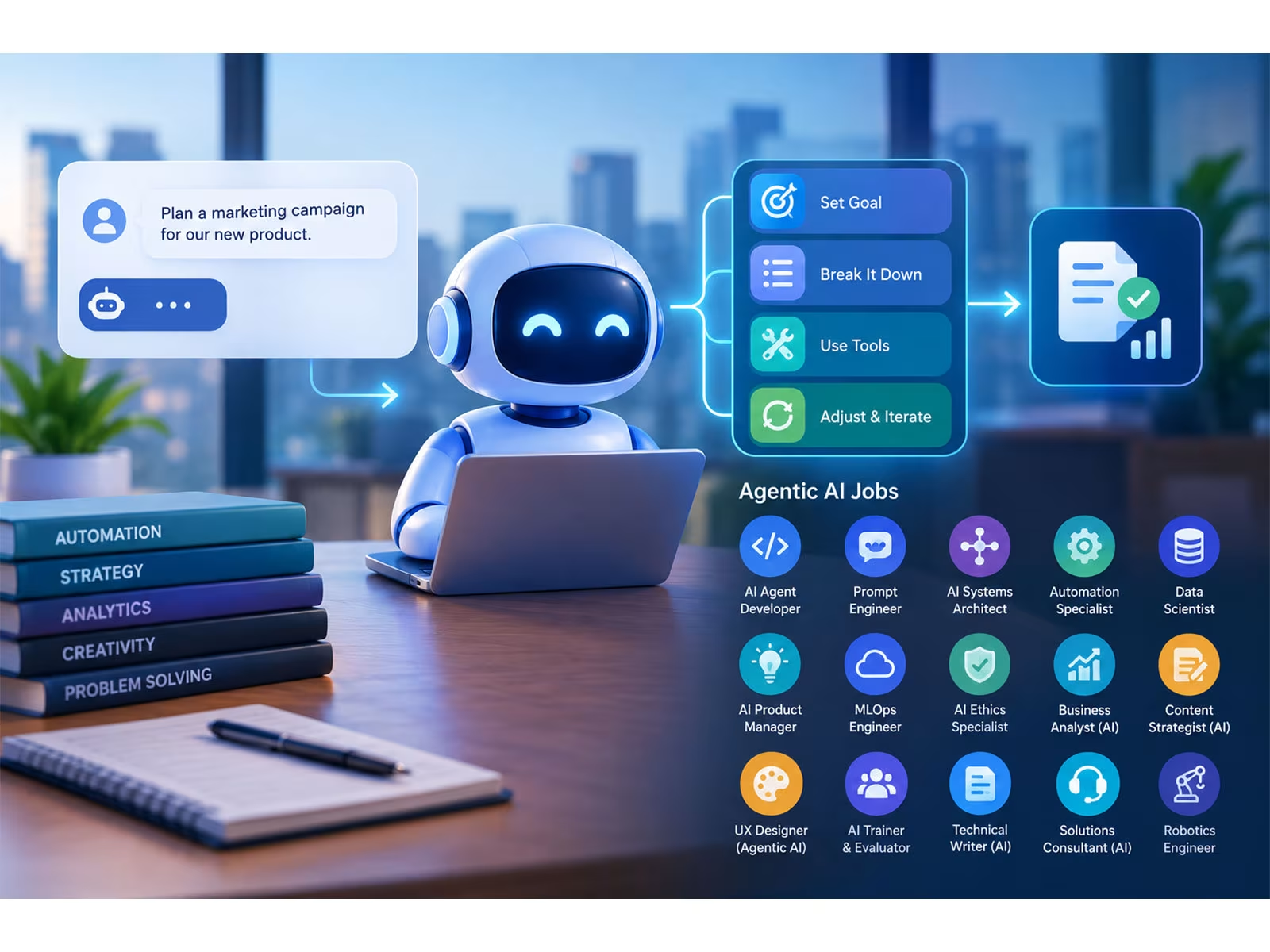
College students are increasingly combining traditional degrees with artificial intelligence courses as employers place greater emphasis on practical digital skills. The trend reflects a widening gap between the pace of workplace technology and the time required for formal academic programmes to change their curricula.
Students Are Adding AI Skills Outside the Classroom
Students from engineering, business, commerce, arts and other disciplines are exploring online AI courses, certifications and practical projects alongside their university studies. Many see these programmes as a way to gain skills that can be applied directly to internships and entry-level jobs.
Generative AI has made this shift more visible because tools for writing, coding, research, data analysis and design are already being used in workplaces. Students are therefore learning how to use AI systems while continuing to complete their formal degrees.
Employers Are Looking Beyond Degrees
A university qualification remains important for many careers, but employers are increasingly assessing candidates on the skills they can demonstrate. Practical experience with AI tools, data, software development, automation and digital workflows can help candidates distinguish themselves in competitive hiring markets.
For students, projects can provide evidence of these abilities. Building an AI application, analysing a dataset or creating an automated workflow can demonstrate practical knowledge that may not be visible from a degree title alone.
Generative AI Changes the Skills Students Need
Generative AI has expanded the range of skills students can develop without waiting for a formal course to be introduced at their college. Large language models, AI assistants, prompt design, AI agents and retrieval-based applications are becoming common areas of independent learning.
At the same time, students need to understand the limitations of AI systems. Checking outputs, protecting sensitive information and applying human judgment remain important when AI tools are used for academic or professional work.
Universities Are Adapting
Colleges and universities are responding by adding AI subjects, updating existing courses and introducing new programmes. However, curriculum changes can take time because academic institutions must consider faculty expertise, course structures, accreditation and changing technology.
This has encouraged many students to supplement their classroom education with online learning and hands-on experimentation rather than waiting for every emerging technology to become part of a formal syllabus.
The Degree and Skills Combination
Combining a degree with relevant AI skills can provide students with both subject knowledge and practical technology experience. A business student, for example, can learn AI-powered analytics, while a communications student can develop skills in AI-assisted content workflows.
The combination can also help students understand how AI applies to a particular industry rather than treating artificial intelligence as a standalone technical subject.
Latest Status
Students are increasingly using AI courses, certifications and practical projects to complement traditional degrees as workplace technology evolves. The trend reflects a broader shift toward continuous skills development, with formal education providing foundational knowledge while additional learning helps students respond to changing job requirements.