
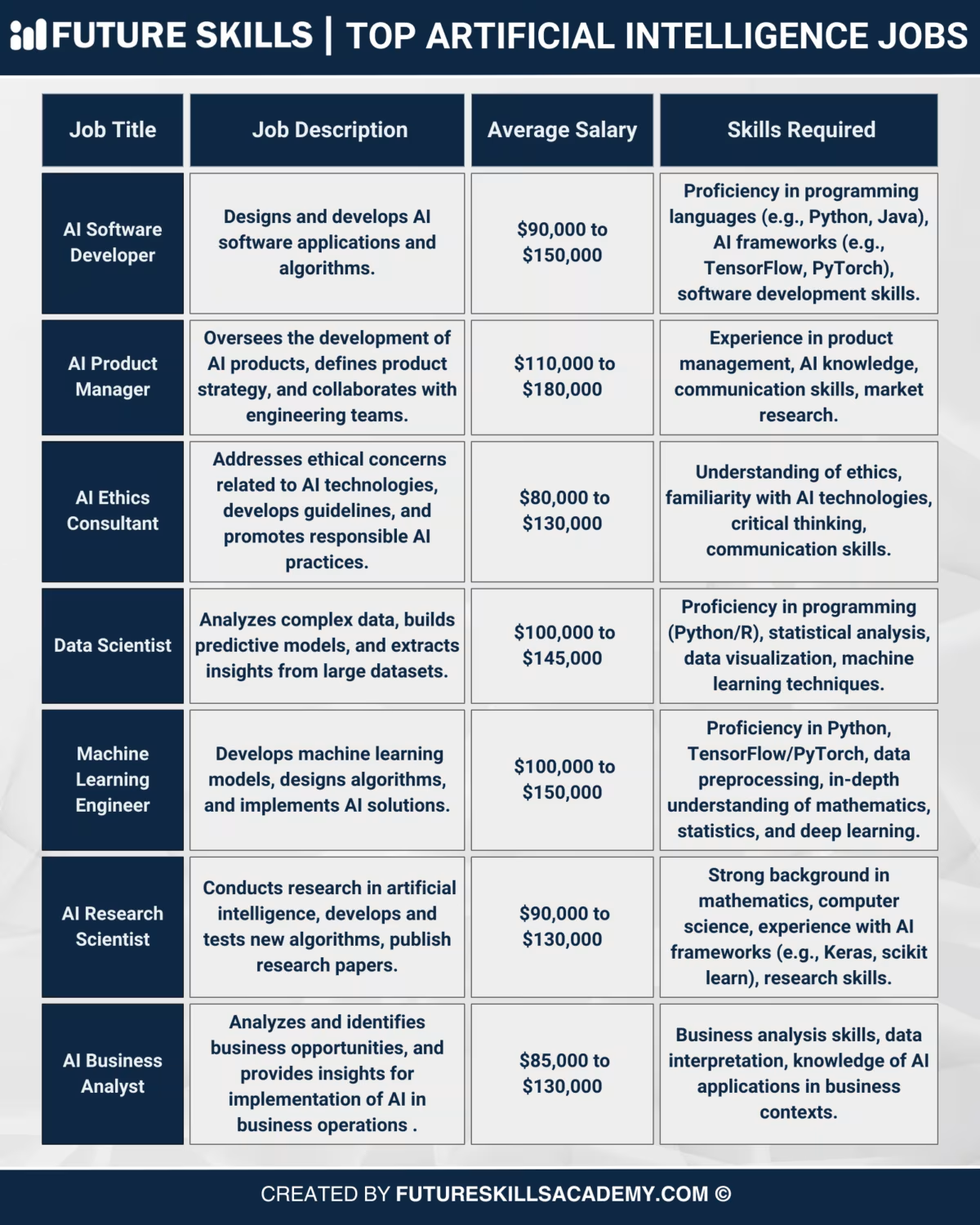
Artificial intelligence is expanding career opportunities across software development, data analysis, research and business operations. In 2026, employers are looking for professionals who can develop AI applications, manage machine learning systems, analyse data and integrate intelligent tools into business processes.
AI careers include technical positions such as machine learning engineer and generative AI engineer, as well as business-focused roles such as AI product manager and AI consultant. The qualifications, responsibilities and experience required vary by position and employer.
Artificial intelligence is used across industries including finance, healthcare, education, manufacturing, retail and information technology. This broad adoption has created opportunities for software developers, graduates, data professionals and experienced workers looking to develop AI-related skills.
AI Engineer
AI engineers develop software applications that use artificial intelligence to solve practical problems. Their work can include integrating language models, building intelligent assistants, connecting AI systems to databases and deploying AI-powered features.
Important skills include Python, software development, APIs, cloud computing and model evaluation. Engineers working with generative AI may also need knowledge of prompt design, retrieval-augmented generation and large language model integration.
Machine Learning Engineer
Machine learning engineers design, train, evaluate and deploy models that identify patterns in data. Their work supports applications such as fraud detection, recommendation systems, demand forecasting and predictive maintenance.
Python, statistics, data preparation and frameworks such as PyTorch, TensorFlow and scikit-learn are useful skills. Production-focused positions may also require experience with model monitoring, testing and deployment pipelines.
Data Scientist
Data scientists analyse information to identify trends, test hypotheses and support business decisions. They may develop predictive models, conduct experiments, build dashboards and explain findings to business teams.
Common requirements include Python or R, SQL, statistics, data visualisation and machine learning. Strong communication skills are also important because technical results must be translated into useful recommendations.
Generative AI Engineer
Generative AI engineers build applications using models that produce text, images, code and other content. Common projects include document assistants, customer-support chatbots, research tools and automated content workflows.
Relevant skills include language model APIs, embeddings, vector databases, retrieval-augmented generation and AI response evaluation. Engineers must also consider accuracy, data privacy, latency and operating costs.
Natural Language Processing Engineer
Natural language processing engineers develop systems that analyse and process human language. Applications include translation, text classification, sentiment analysis, information extraction and conversational interfaces.
Python, machine learning, transformer architectures and language-processing libraries are useful for this role. Some positions overlap with generative AI development, while others focus on specialised language tasks.
Computer Vision Engineer
Computer vision engineers build systems that interpret images and video. Their work can support medical imaging, industrial inspection, robotics, retail analytics and driver-assistance technologies.
Important skills include Python, image processing, deep learning and tools such as OpenCV and PyTorch. Candidates should understand how to evaluate models under different lighting conditions, image qualities and real-world environments.
AI Research Scientist
AI research scientists investigate new algorithms, model architectures and learning methods. Their responsibilities may include designing experiments, analysing results and publishing research.
These positions generally require strong programming, mathematics and machine learning knowledge. Many research-focused roles prefer postgraduate qualifications, although requirements differ across research teams and organisations.
MLOps Engineer
MLOps engineers help deploy, monitor and maintain machine learning systems in production. They work on the infrastructure and processes needed to keep models reliable, accessible and efficient.
Useful skills include Python, Docker, cloud platforms, automated testing, monitoring and continuous integration. Some roles also require Kubernetes, model versioning and data pipeline management.
Data Engineer
Data engineers build systems that collect, transform, store and deliver data for analytics and AI applications. Their work ensures that data is accessible, organised and suitable for model training and business analysis.
SQL, Python, database design and data pipelines are central to this role. Cloud data platforms and distributed processing technologies may also be required for larger systems.
AI Product Manager
AI product managers guide the development of products that use artificial intelligence. They work with technical teams and business stakeholders to define user needs, prioritise features and evaluate product performance.
The role requires communication, product planning, analytical thinking and an understanding of AI capabilities and limitations. Previous product management or industry experience may be expected for many positions.
AI Consultant
AI consultants help organisations identify opportunities to use artificial intelligence in their operations. Their work may include assessing business processes, selecting appropriate tools and planning AI implementation projects.
Business analysis, communication, project management and technical knowledge are valuable skills. Industry expertise can also help consultants recommend solutions that address specific operational needs.
AI Ethics and Governance Specialist
AI ethics and governance specialists help organisations assess and manage risks associated with artificial intelligence. Their responsibilities may include reviewing data practices, documenting model limitations and supporting compliance with privacy and responsible AI policies.
Depending on the position, relevant knowledge may include risk management, cybersecurity, privacy law, model evaluation and regulatory compliance. These professionals often work with legal, technical and business teams.
Skills Needed for AI Careers
Python, SQL, data analysis and problem-solving provide a useful foundation for many AI-related positions. Technical roles may require additional knowledge of machine learning, statistics, software engineering and cloud deployment.
Generative AI jobs often involve language model integration, retrieval systems and evaluation methods. Business-focused roles may place greater emphasis on communication, industry knowledge and project management.
Practical projects can help candidates demonstrate their skills. Examples include a predictive model, an AI document assistant, an image classifier or a data pipeline, supported by clear documentation and testing results.
AI Job Opportunities in India
India’s AI job market includes opportunities in technology services, software development, financial services, healthcare, retail and manufacturing. Requirements vary by employer, and hiring demand changes as businesses adopt new tools and adjust their technology budgets.
Salary levels depend on experience, location, company size and specialisation. Candidates should compare current job advertisements and salary reports rather than rely on a single estimate as a guarantee of earnings.
People entering the field should review job descriptions to identify common requirements, develop relevant technical skills and build projects that demonstrate practical ability. Existing software developers may focus on AI application development, while candidates with strong analytical backgrounds may consider data science or machine learning.
As of October 2026, artificial intelligence offers career paths across engineering, research, data infrastructure and business strategy. Choosing a suitable role depends on a candidate’s existing skills, education, professional interests and willingness to continue learning as AI technologies develop.