
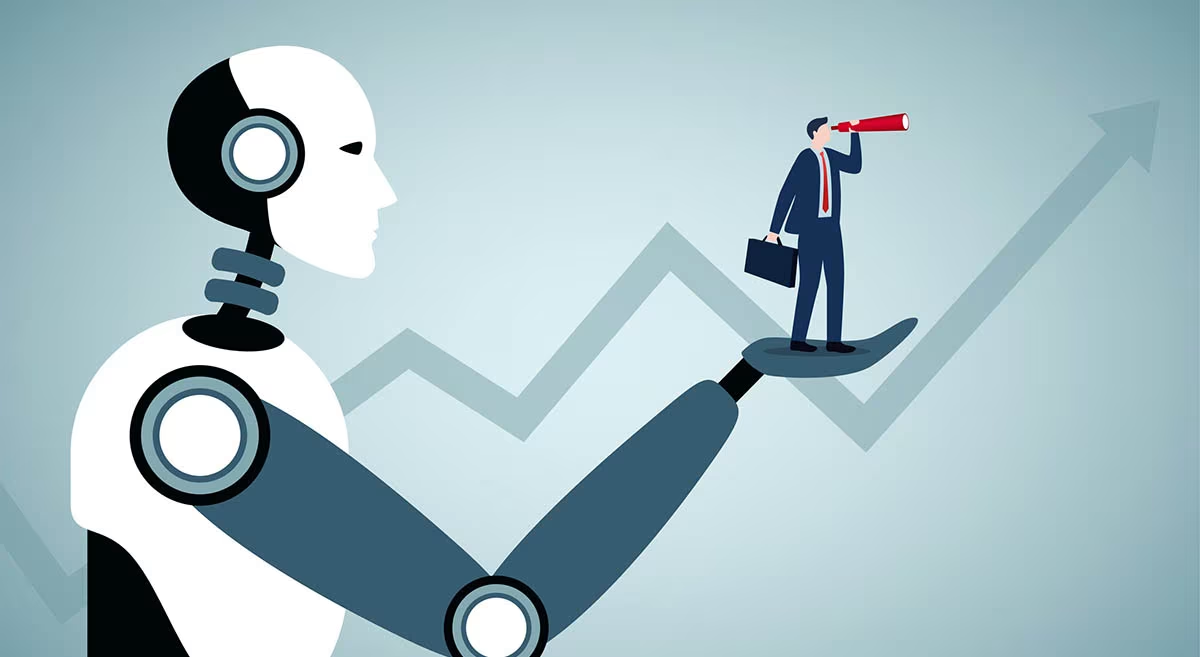
Artificial intelligence is changing the workplace, but the evidence does not point to a simple future in which AI replaces all human workers. Instead, AI is expected to automate some tasks, change existing jobs, increase productivity in some areas and create demand for new skills and occupations.
AI Is Changing Jobs Before Replacing Them
Most jobs involve a combination of tasks, and AI may automate only some of them. Writing drafts, summarising documents, analysing information, generating code and handling routine customer requests are examples of activities that can increasingly be supported by AI.
When individual tasks are automated, workers may spend more time on responsibilities that require judgment, communication, creativity, supervision and interaction with customers or colleagues.
Which Jobs Face More AI Exposure
Occupations containing large amounts of predictable, digital and computer-based work are more exposed to AI-driven automation. Administrative support, routine information processing, some customer service activities and parts of content production are among the areas experiencing significant changes.
However, exposure to AI does not necessarily mean that an occupation will disappear. The International Labour Organization has found that generative AI is more likely to transform many occupations than fully automate them because human involvement remains necessary for many tasks.
AI Is Also Creating New Work
The growth of AI is creating demand for skills related to AI development, data analysis, cybersecurity, automation, model evaluation and AI governance. Existing professions are also incorporating AI into everyday workflows.
Software developers, marketers, designers, researchers, financial professionals and educators can use AI tools to assist with selected tasks while continuing to perform responsibilities that require specialised knowledge.
Human Skills Still Matter
Critical thinking, communication, problem-solving, creativity, collaboration and domain expertise remain important in workplaces using AI. People are still needed to define objectives, assess AI-generated results and make decisions when context or accountability matters.
As adoption grows, workers may increasingly benefit from understanding how AI systems work, where they are useful and where their outputs require human review.
The Impact Will Vary
The effect of AI will differ across industries, occupations and countries. Adoption depends on factors including technology costs, business needs, regulation, available skills and the type of work being performed.
For some workers, AI may reduce repetitive work and increase productivity. For others, changing workflows may require new training or a shift toward different responsibilities.
Latest Status
AI is already reshaping employment, but current evidence supports a more complex picture than mass replacement alone. The continuing transition involves task automation, job transformation, productivity gains, new skills and the emergence of AI-related work.